

When families inherit property in Florida, the complexity of probate procedures and title requirements can feel overwhelming during an already difficult time. Many heirs and personal representatives wonder whether Florida law mandates title insurance when selling inherited property, what the costs involve, and how the probate process affects the timeline for completing a sale. Understanding Florida’s specific laws and local Jacksonville real estate market customs helps executors make informed decisions that protect both the estate’s value and the buyer’s interests. In this blog post, Jacksonville real estate expert Phil Aitken discusses whether Florida law requires title insurance for inherited property sales, what protections it provides, and how to navigate this process efficiently.
Key Takeaways
- Florida law does not mandate that sellers purchase title insurance, but selling inherited property without it is impractical because buyers’ lenders require proof of clear title through an owner’s policy.
- Title insurance protects against common defects that can plague Florida inherited properties, including creditor liens, unknown heirs, improperly executed wills, and homestead exemption complications.
- Florida probate timelines vary significantly by county, with Duval County averaging 6-12 months for formal administration, which is crucial for planning the property sale.
- Jacksonville inherited property sales require specialized expertise to coordinate Florida probate court requirements, county-specific title insurance customs, and real estate market timing for optimal results.
In Florida, sellers of inherited property are not legally required by state statute to purchase title insurance. However, selling inherited property without title insurance is nearly impossible in practice. Buyers and their mortgage lenders require proof of clear title to protect their investment, making an owner’s title insurance policy a standard and non-negotiable expectation in virtually every Florida real estate transaction involving an inherited home.
To Discuss Your Home Sale or Purchase, Call or Text Today and Start Packing!
Phil Aitken specializes in Florida probate property sales, having personally navigated the complexities of serving as a personal representative for his own family’s estate. His experience with Jacksonville probate procedures, combined with connections to multiple cash buyers and proven systems for selling homes in Jacksonville, helps executors and heirs sell inherited properties efficiently—often receiving multiple offers within 24 hours when estates need quick liquidity.
Understanding Florida’s Title Insurance Requirements for Inherited Property
Understanding Florida’s Title Insurance Requirements for Inherited Property
While Florida statutes do not force a seller to buy title insurance, the market effectively does. A real estate transaction involves two types of policies: an owner’s policy and a lender’s policy. Understanding the difference is crucial for personal representatives managing an estate and navigating the complexities of Northeast Florida real estate transactions.
Types of Title Insurance Policies
- Owner’s Title Insurance Policy: This protects the new buyer’s ownership rights to the property. It shields them from financial loss due to title defects that existed before their purchase, such as liens, forgeries, or claims from previously unknown heirs. Because inherited properties can have complex histories spanning years or even decades, virtually no informed buyer will purchase one without this protection.
- Lender’s Title Insurance Policy: On the other hand, this protects the mortgage company’s financial interest in the property and is a mandatory requirement for any buyer who is financing their purchase through traditional lending channels.
Who Pays for the Owner’s Title Insurance?
The question of who pays for the owner’s title insurance varies significantly by local custom across Florida’s 67 counties:
- Northeast Florida vs. South Florida: In some counties, including much of Northeast Florida, it is standard for the seller to pay for the owner’s policy, while in others, particularly in South Florida, the buyer covers the cost.
- Jacksonville Market Practices: When buying a home in Jacksonville, understanding these customs becomes essential. A knowledgeable real estate professional familiar with local market practices can clarify the expectations in your area, ensuring the estate’s financial obligations are clear from the start and properly budgeted into the settlement costs.
Timing and Title Search Importance
Additionally, the timing of when title insurance is obtained matters for inherited properties. The title company will conduct a thorough title search examining decades of public records related to the property. This search often uncovers issues that must be resolved before closing, such as:
- Old liens
- Boundary disputes
- Gaps in the chain of ownership
Starting this process early in the probate timeline helps avoid last-minute surprises that could delay the sale or reduce the estate’s proceeds.
How Much Does Title Insurance Cost for Inherited Property in Florida?
The cost of title insurance in Florida is state-regulated, meaning the premium rates are set by the Florida Department of Financial Services. This is known as the “promulgated rate,” ensuring consistency across all licensed title companies. The premium is calculated based on the property’s sale price using a sliding scale. For example, the rate is $5.75 per thousand dollars of value up to $100,000, with the rate per thousand decreasing as the property value increases. This means a $300,000 inherited property sale would result in a title insurance premium of approximately $2,500 to $2,800, depending on the specific coverage tier selected.
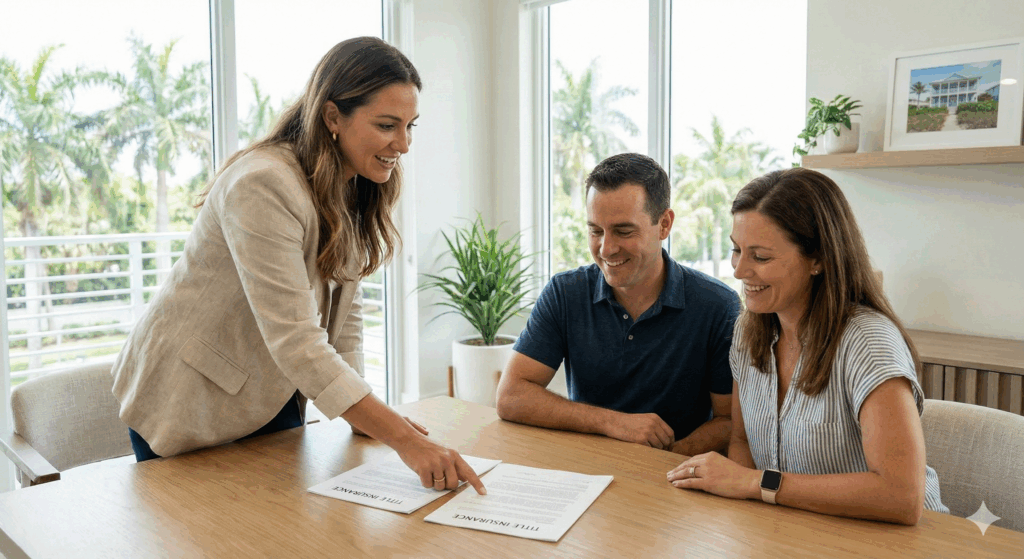
Total Closing Costs
While the premium itself is regulated, total closing costs can include other related fees. These additional expenses are important for an executor to budget for when planning to sell your home in Jacksonville and settling the estate’s accounts.
- Title Search Fee: The cost for the title company to examine public records, typically ranging from $150 to $300 in Duval County.
- Closing Fee: An administrative fee charged by the title company or attorney for handling the transaction, usually $300 to $500.
- Documentary Stamp Taxes: A state tax on the deed, calculated at $0.70 per $100 of the sale price (meaning $2,100 on a $300,000 sale).
- Recording Fees: Charges from the county clerk’s office to officially record the new deed and other legal documents, typically $50 to $150.
- Probate-Related Fees: Additional costs may include court filing fees, certified copies of Letters of Administration, and other documentation required to prove the personal representative’s authority to sell.
Understanding these costs upfront is vital for managing estate finances and ensuring a smooth closing process. When working with a top realtor in Jacksonville who specializes in probate sales, you receive detailed cost estimates early in the process, allowing the personal representative to plan appropriately and avoid unexpected financial burdens on the estate.
Florida County Title Insurance
| County Name | Estimated Premium for $300K Sale | Who Typically Pays | Doc. Stamp Tax Rate |
|---|---|---|---|
| Duval | $1,575 | Seller | $0.70 / $100 |
| St. Johns | $1,575 | Seller | $0.70 / $100 |
| Clay | $1,575 | Seller | $0.70 / $100 |
| Nassau | $1,575 | Seller | $0.70 / $100 |
| Miami-Dade | $1,575 | Buyer | $0.60 / $100 |
| Broward | $1,575 | Buyer | $0.70 / $100 |
| Palm Beach | $1,575 | Buyer | $0.70 / $100 |
| Orange | $1,575 | Seller | $0.70 / $100 |
| Hillsborough | $1,575 | Seller | $0.70 / $100 |
| Pinellas | $1,575 | Seller | $0.70 / $100 |
| Lee | $1,575 | Buyer | $0.70 / $100 |
| Polk | $1,575 | Seller | $0.70 / $100 |
| Brevard | $1,575 | Seller | $0.70 / $100 |
| Volusia | $1,575 | Seller | $0.70 / $100 |
| Sarasota | $1,575 | Buyer | $0.70 / $100 |
Frequently Asked Questions
Even when an inherited Florida property has no existing mortgage, title insurance remains essential for a successful sale. While the absence of a mortgage eliminates the need for a lender’s title insurance policy, any potential buyer (and their lender, if they are financing the purchase) will still demand an owner’s title insurance policy to prove they are receiving clear title. Florida probate can uncover hidden issues like creditor liens, unknown heirs, or improperly recorded documents that existed during the deceased’s ownership. Title insurance protects the new buyer from these past problems, making the property marketable and the transaction financially secure. It is a standard and necessary cost of selling that protects both the estate and the buyer from future disputes, regardless of whether the inherited property itself carried debt. Without this coverage, finding a willing buyer becomes nearly impossible in today’s real estate market.
When Can You Sell Inherited Property in Florida? Probate Timeline Explained
Before a personal representative can sell an inherited property in Jacksonville, they must first navigate the Florida probate process and obtain legal authority from the Duval County Probate Court. The timeline is largely dictated by the type of probate administration required and the complexity of the estate’s assets and beneficiaries.
Types of Probate Administration
- Summary Administration: This is a simplified process available for estates valued under $75,000 or for estates where more than two years have passed since the decedent’s death. This streamlined process can often be completed in 3-4 months, making it the fastest option for qualifying estates.
- Formal Administration: More commonly, estates with real estate require formal administration, which typically takes 6-12 months in Duval County and throughout much of Florida. Complex estates involving disputes among heirs, challenges to the will’s validity, or significant creditor claims can extend the timeline to 18-24 months or longer.
Understanding which administration type applies to your situation helps set realistic expectations for when the property can be sold and when beneficiaries can expect to receive their distributions.
Key Stages Affecting the Sale
The probate process includes several key stages that affect when a property can be sold:
- Letters of Administration: After opening the estate with the court, the judge issues “Letters of Administration” to the personal representative, which grant legal authority to act on behalf of the estate.
- Creditor Claim Period: This is followed by a mandatory 90-day creditor claim period mandated by Florida Statute 733.2121, during which known and potential creditors must be notified of the estate proceedings.
Note: While the property can be marketed and shown to potential buyers during this period, the sale typically cannot close until creditor claims are resolved and, in some cases, until the court provides specific approval of the sale terms.
Court Approval and Sale Thresholds
Florida law generally allows personal representatives to sell estate property without court approval if the sale price meets certain thresholds (typically 90% or more of the appraised value). However, the Duval County Probate Court may need to supervise and approve the transaction in the following situations:
- Sales below the 90% threshold.
- Situations involving disputes among heirs.
Working with professionals who understand these nuances helps executors navigate the process efficiently while protecting the estate’s interests.
“Having personally served as the personal representative for my own family’s estate, I understand the emotional weight and logistical complexity that executors face navigating Florida probate. That firsthand experience drives my commitment to simplifying this process for every family I serve, providing clear guidance through Duval County probate procedures while protecting the estate’s value and honoring your loved one’s legacy.” – Phil Aitken
| County Name | Summary Administration (Avg Timeline) | Formal Administration (Avg Timeline) | Notes on Local Procedures |
|---|---|---|---|
| Duval | 3-4 Months | 6-12 Months | Efficient processing, but requires strict adherence to local court rules to avoid delays. |
| St. Johns | 2-4 Months | 6-10 Months | Known for faster processing times due to lower volume, but rising property values can complicate summary administration eligibility. |
| Clay | 3-5 Months | 7-12 Months | Standard procedures, generally following a timeline similar to Duval but with a slightly smaller caseload. |
| Nassau | 3-5 Months | 7-13 Months | Smaller court system; however, complex property records or title issues can sometimes cause unexpected delays. |
| Miami-Dade | 4-6 Months | 9-18 Months | High-volume court where delays are common. Bilingual documentation and specific procedural steps are often required. |
| Broward | 4-6 Months | 8-16 Months | Very high caseload similar to Miami-Dade. Filings undergo strict procedural review, and precision is critical. |
| Orange | 3-5 Months | 7-14 Months | A busy urban court system that demands meticulous filings to avoid rejection and keep the process on track. |
| Hillsborough | 3-5 Months | 7-14 Months | An efficient but very formal court. Pro se filings (without an attorney) often face significant scrutiny. |
Timelines are estimates based on typical estates without disputes; complex cases with litigation or federal estate tax requirements may take significantly longer.
Seven Common Title Defects That Plague Florida Inherited Properties
Inherited properties are particularly susceptible to title defects—hidden issues that can jeopardize a sale and create legal liabilities for the estate. Title insurance is designed specifically to protect against these types of problems, which is why no experienced real estate professional would recommend proceeding with a sale of homes for sale in Jacksonville without proper coverage. A knowledgeable agent with probate experience can help identify and resolve these issues before they derail a transaction or expose the estate to liability.
Common Title Defects in Florida Inherited Properties
Here are seven common title defects found in Florida inherited properties:
1. Creditor Liens
The deceased may have had outstanding debts, and creditors can place liens on the property to secure payment. These must be satisfied before the title can be transferred cleanly. Florida law prioritizes certain claims, and understanding the creditor hierarchy is essential for personal representatives.
2. Unknown Heirs
An unknown or missing heir could surface years later and claim an ownership interest in the property, creating a legal nightmare for the new owner. This is particularly common in estates where the deceased had been married multiple times or had children from different relationships.
3. Improperly Executed Wills
If a will was not signed, witnessed, or notarized according to strict Florida laws (Florida Statute 732.502), its validity can be challenged, casting doubt on who has the right to inherit and sell the property. Florida requires two witnesses for will execution, and technical defects can invalidate even clearly stated intentions.
4. Outstanding Mortgages
An existing mortgage or home equity line of credit on the property must be paid off from the sale proceeds before a clear title can be given to the buyer. Sometimes these liens are not immediately obvious if the deceased had stopped receiving paper statements.
5. Judgment Liens
If the deceased had a legal judgment against them from lawsuits, unpaid child support, or other court orders, that judgment may attach to their real estate and must be cleared before transfer. These can remain attached to the property for up to 20 years in Florida.
6. Unpaid Property Taxes
Property taxes are a high-priority lien in Florida. Any delinquent taxes must be paid at closing to avoid a future tax sale of the property. Additionally, the personal representative must file the decedent’s final income tax returns and ensure any estate tax obligations are satisfied.
7. Florida Homestead Complications
Florida’s constitution provides some of the strongest homestead protections in the nation for surviving spouses and minor children, which can restrict or prevent the sale of a primary residence even if a will states otherwise. Florida Statute 222.05 creates complex inheritance rules that can override testamentary intent.
The Value of Title Insurance
Understanding these potential defects explains why title insurance remains essential even when Florida law doesn’t explicitly require it. The cost of the policy is minor compared to the financial devastation that could result from an undetected title problem discovered after the sale closes.
Can You Sell Florida Inherited Property Without Going Through Probate?
In certain situations, it is possible to transfer real estate in Florida without a formal probate process. This typically occurs when the deceased engaged in specific types of estate planning designed to avoid probate court involvement.
Common Non-Probate Transfer Methods
- Revocable Living Trusts: If the property was held in a revocable living trust, the successor trustee named in the trust document has the authority to sell it according to the trust’s terms, bypassing probate court entirely. This can significantly accelerate the timeline for selling the property and distributing proceeds to beneficiaries.
- Joint Tenants with Right of Survivorship: Properties owned as “joint tenants with right of survivorship” allow the surviving owner to automatically inherit the deceased owner’s interest by operation of law.
- Lady Bird Deeds: Florida also recognizes “enhanced life estate deeds,” commonly called “Lady Bird Deeds,” which allow property to pass directly to a named beneficiary upon the owner’s death without probate.
These planning tools provide valuable alternatives for families who wish to simplify the transfer process and reduce administrative costs.
Requirements for Non-Probate Transfers
However, it is critical to understand that even when probate is avoided, title insurance remains necessary and buyers will demand it. A title company will need to verify the seller’s authority by reviewing:
- Trust documents
- Death certificates
- Other relevant legal papers
Additionally, these non-probate transfers must still satisfy any creditor claims and ensure property taxes are current. While these mechanisms can simplify the process and reduce the timeline, they do not eliminate the need to prove a clear and marketable title to a potential buyer or their lender.
Planning for the Future
For families evaluating whether to pursue probate avoidance strategies for future estate planning, consulting with both a probate attorney and an experienced real estate professional provides comprehensive guidance. Many Jacksonville families benefit from understanding how these tools work in practice, not just in theory, particularly when real estate represents a significant portion of the estate’s value.
“My team has helped hundreds of families navigate both traditional probate sales and non-probate transfers throughout Florida. What I’ve learned is that while avoiding probate can save time and money, the transaction still requires careful attention to title issues, property condition, and market timing to protect the family’s financial interests. Having a dedicated advocate who understands both the legal and real estate aspects makes all the difference.” – Phil Aitken
Working With Cash Buyers for Jacksonville Inherited Properties
For personal representatives who need to sell an inherited property quickly, cash home buyers in Jacksonville offer an alternative to traditional listings. Cash buyers can often provide offers within 24-48 hours and close in as little as 14 days once probate court authorization is obtained. This speed can be invaluable when the estate needs immediate liquidity to pay debts, taxes, or provide distributions to beneficiaries who are facing financial hardship.
Cash offers typically range from 70-85% of the property’s retail market value, reflecting the buyer’s need to account for repairs, carrying costs, and profit margin. However, when you factor in the costs a traditional sale would involve—agent commissions, repairs, staging, months of utilities and property taxes, and potential price reductions—the net proceeds from a cash offer often compare more favorably than the gross price difference suggests. Additionally, cash buyers purchase properties “as-is,” eliminating the burden on the personal representative to coordinate repairs, cleanouts, or property improvements.
The decision between a traditional listing and a cash offer depends on several estate-specific factors including the property’s condition, the urgency of the sale, whether heirs agree on the strategy, and the personal representative’s capacity to manage a longer marketing period. Many executors find value in obtaining both a market analysis for a traditional listing and multiple cash offers, then comparing the projected net proceeds and timelines to make an informed decision that serves the estate’s best interests.
Why Choose Phil Aitken to Sell Your Jacksonville Inherited Property
When you need to sell an inherited property in Jacksonville, working with a real estate professional who understands Florida probate procedures and has personal experience as an executor makes all the difference. Phil Aitken at Your Home Sold Guaranteed Realty - Phil Aitken Home Team brings specialized expertise combined with compassionate guidance through one of life’s most difficult transitions. With nearly 70% of his business coming from repeat clients and referrals and hundreds of 5 Star Google reviews, Phil’s relationship-focused approach demonstrates his commitment to serving families with excellence rather than simply closing transactions.

Phil’s proven systems help sell inherited properties efficiently while maximizing value for heirs. His team sells homes 4x faster than the market average and typically achieves 5.1% higher prices than comparable properties. The Guaranteed Sale Program provides peace of mind that the property will sell within the agreed timeframe—or his team will buy it themselves—eliminating uncertainty during estate settlement. His database of pre-qualified buyers and connections to multiple cash investors mean he can often present multiple purchase options to executors within 24-48 hours, giving personal representatives the flexibility to choose the approach that best serves the estate.
Beyond transactional excellence, Phil understands the emotional journey families face when settling an estate. His team provides support that extends beyond real estate, including coordination with probate attorneys, estate sale professionals, property maintenance vendors, and other specialists who help personal representatives fulfill their duties. For a confidential consultation about your inherited property and a customized strategy for your situation, call (904) 544-5252 today.
Specialized Probate Real Estate Expertise
Phil brings both firsthand experience and deep empathy to families navigating probate. Having personally served as the personal representative for his own family’s estate, he understands the emotional and logistical challenges that come with settling a loved one’s affairs while managing real estate decisions. That experience inspired him to develop specialized systems and partnerships specifically designed to help others through this difficult transition, providing turnkey support that goes far beyond traditional real estate services.
Comprehensive Probate Concierge Services
With nearly two decades of experience serving families throughout Florida, Phil provides comprehensive probate concierge services including:
- Property Maintenance & Security: Coordination of re-keying, vacant home checks, and insurance guidance.
- Estate Sales: Coordination of sales and personal property evaluation.
- Appraisals: Accurate date-of-death appraisals for estate tax purposes.
- Professional Connections: Access to trusted probate attorneys and estate professionals statewide.
His vendor network handles everything from estate cleanouts and repairs to landscaping, auto disposition, and specialized appraisals, removing administrative burdens from overwhelmed executors.
Tailored Real Estate Solutions
Phil offers multiple real estate solutions tailored to each estate’s unique needs and timeline:
- Traditional Listings: Maximize value when time permits and the property is in good condition.
- “As-Is” Cash Offers: Provide quick settlements when estates need immediate liquidity or the property requires extensive repairs.
- Creative Options: Solutions like owner financing or lease-purchase arrangements serve special situations where maximizing proceeds requires flexibility.
This comprehensive approach ensures every executor has options that align with the estate’s specific circumstances and the beneficiaries’ needs.
Proven Track Record and Credentials
With more than 20 years in the real estate industry (licensed 2005, active sales since 2014) and leading a team of 8+ top-performing agents, Phil has completed over 700 transactions throughout his career.
- 2021 Performance: His team sold 100% of its listings in 2021—all 130 homes, representing over $40 million in volume—demonstrating the effectiveness of his systems even in challenging market conditions.
- Awards: He has been recognized with the JAX Chamber of Commerce Small Business Leader of the Year award and named a FastExpert Top Realtor in Jacksonville (2022).
- Process: His 192-step success plan ensures every detail is handled professionally from initial consultation through final distribution of proceeds to heirs.
Mission and Community Impact
Phil and his wife Janet are dedicated to their faith-based mission: “Honor God in all we do, serve with excellence, and grow profitably.” They proudly partner with the Tim Tebow Foundation to fight human trafficking and with Rethreaded, an organization that empowers survivors by providing employment and support.
Their “Go Serve Big” philosophy drives everything they do in the Jacksonville community and beyond, reflecting their belief that business success should serve a higher purpose. You can learn more about Phil’s journey and the experiences that shaped his approach by reading Phil’s Story.
Contact Us
Ready to discuss selling your inherited Jacksonville property with a team that understands both the legal complexities and the emotional weight you’re carrying? Contact us today at (904) 544-5252 and let us help guide you through this process with expertise, compassion, and proven results.
Follow Us on Social Media
Follow Phil Aitken Home Team on social media for the latest Jacksonville and Northeast Florida real estate insights, market updates, and home buying and selling tips. Connect with us on YouTube, Facebook, Instagram, and LinkedIn for exclusive content and expert guidance.